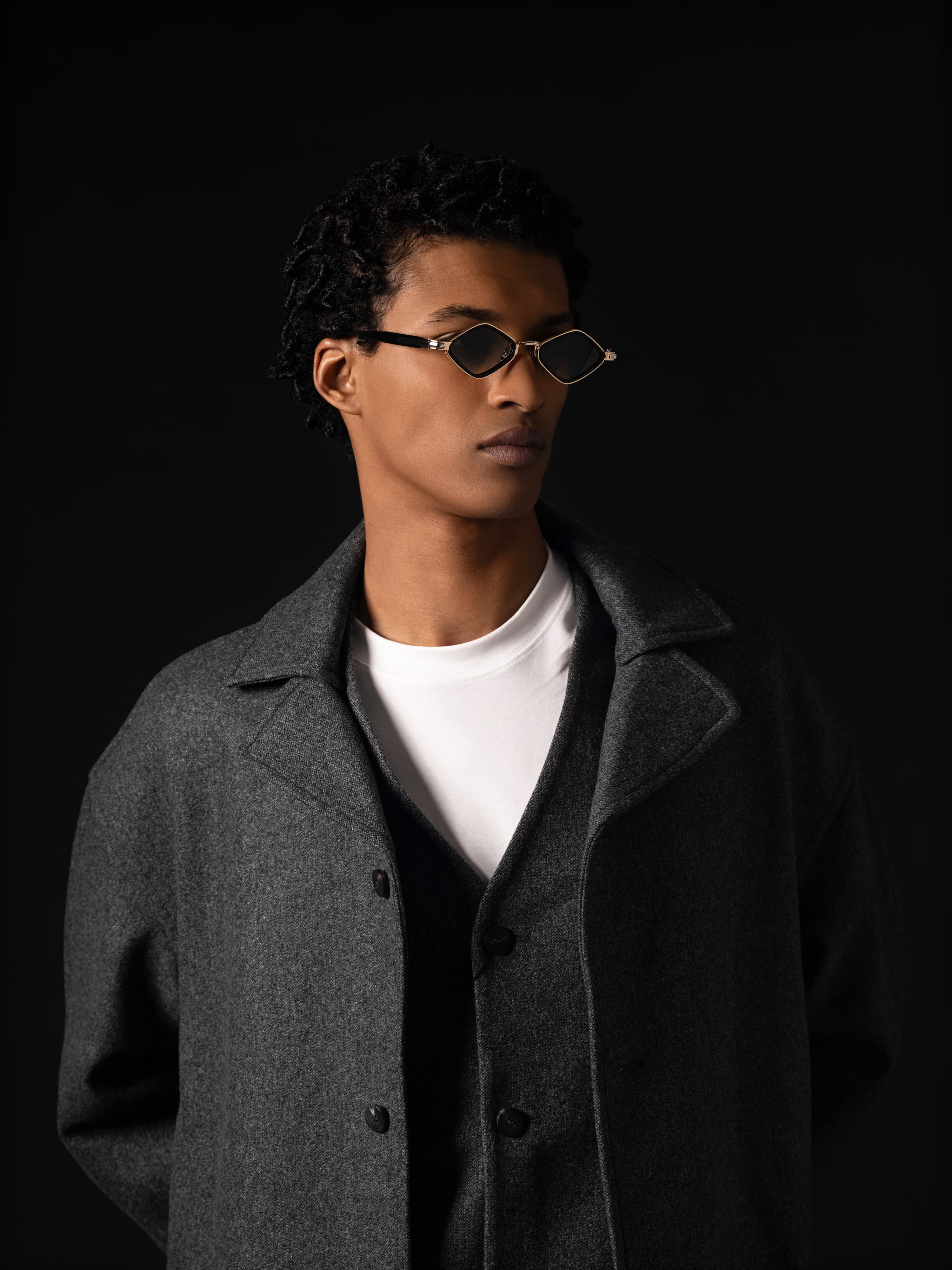
Craft
Matsuda: details worth a closer look
A hinge, an acetate edge, a finish. The places where a larger shape finds its character.
September 2026 · 3 minute read · Optika Sole

We notice glasses as a whole first. When we pick them up, we discover the transition between surfaces, the end of a temple or the small construction of a hinge. These details rarely fit into the first product photograph. They can be the reason we want a second look.
Behind the word handmade
Handmade does not mean made without tools. What matters is which stages require a person’s judgement, skill and inspection. Shaping, assembly and final checks differ between makers. A single word on a label cannot describe the entire process.
Matsuda describes making its frames in Sabae, Japan, with as many as 250 steps and up to two years from concept to construction. This describes its own practice rather than a rule for all eyewear. Such information is valuable when connected to a particular maker and its work.
A detail you can see and feel
Look at a frame from the side. Does the decoration continue along the temple or remain on the front? Is its silhouette deliberately sharp or soft? Some designs find their character in engraved metal; others in the depth of acetate colour. A restrained frame can demand as much care as an ornate one.
Compare two different approaches in person. Open the temples gently, feel the surfaces and try both frames on. There is no single home test for quality: do not bend a frame to test its metal or try to adjust its hinges yourself.
Craft matters to us because it has a consequence in the object you wear. The story of its making should help you see and understand the frame, while leaving space for your own response when you put it on.
Craft
Back to the journal